
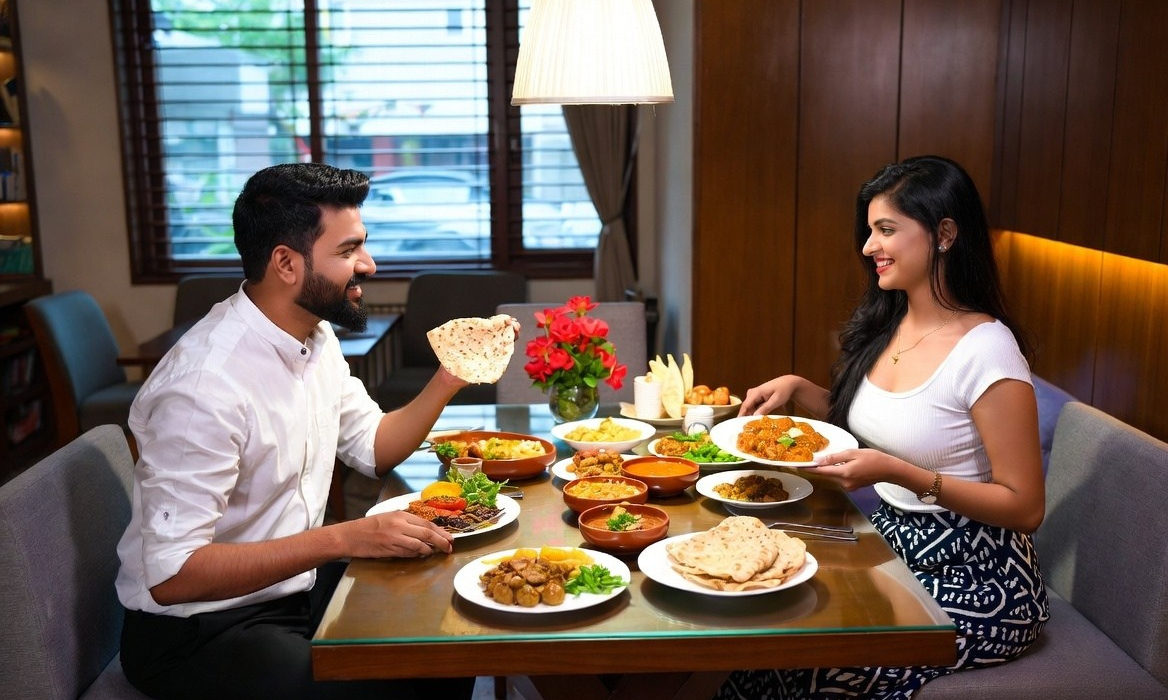
Eating for your heart: what everyone in Kolkata should know
Kolkata Heart Foundation · Clinical Nutrition · April 2026 · 6 min read
The Bengali table is one of the great culinary traditions in the world — rich, varied, deeply satisfying. Fish, rice, lentils, mustard, posto, mishti. It is food that carries memory, identity, and love. It is also food that, eaten without awareness, can quietly accelerate heart disease, diabetes, and kidney damage in people who are already genetically more susceptible than they realise.
This is not about giving up the food you love. It is about understanding which parts of your plate are working for you — and which parts are working against you.
The Kolkata paradox
Here is something worth knowing: Kolkata has one of the highest protein intake levels among India’s major cities, largely because fish features so prominently in the Bengali diet. Fish — particularly smaller freshwater varieties — is rich in omega-3 fatty acids, which actively protect the heart and reduce inflammation. In this respect, the traditional Bengali diet has a genuine advantage.
The challenge lies elsewhere: in the white rice that anchors almost every meal, in the rising consumption of fast food and processed snacks, in the generous use of mustard oil at high heat, and in the sweets — the rosogolla, the mishti doi, the sandesh — that have moved from being festival food to everyday habit. These patterns, over years, take a toll.
Worth knowingMany Bengalis carry what doctors call a “thin-outside, fat-inside” metabolic profile — a normal body weight masking dangerous fat deposits around the organs. This means even people who do not appear overweight may be at significant cardiac and metabolic risk.
The rice question
White rice is not poison. But eaten in large quantities at every meal, it delivers a high glycaemic load — meaning it raises blood sugar rapidly and repeatedly. Over time, this stresses the pancreas, contributes to insulin resistance, and increases the risk of type 2 diabetes, which is itself one of the leading causes of heart disease and kidney damage.
The practical answer is not to eliminate rice but to reduce the portion and pair it better. A smaller quantity of rice alongside a generous serving of dal, vegetables, and fish creates a far more balanced plate. Brown rice or hand-pounded rice retains more fibre and digests more slowly — a meaningful upgrade for anyone with diabetes or pre-diabetes.
What to eat more of
Rohu, katla, hilsa, and mackerel are all excellent sources of heart-protective omega-3s. Steamed or lightly cooked is better than deep fried
Dal at every meal
Lentils are a cornerstone of the Bengali diet for good reason. High in plant protein, fibre, and potassium, they help control blood sugar and support kidney health.
Bitter gourd (uchhe), bottle gourd (lau), drumstick, spinach, and ridge gourd are all low-glycaemic, fibre-rich, and naturally anti-inflammatory.
These staples of Bengali cooking carry genuine anti-inflammatory properties. You have been eating them your whole life — the science is finally catching up.
What to reduce
Salt is perhaps the single most important target. Hypertension — high blood pressure — is extremely common in Kolkata, and excess sodium is a primary driver. The average Indian consumes nearly double the recommended daily salt intake. Processed foods, pickles, papad, and restaurant cooking are the biggest hidden sources. Cooking at home with less salt, and resisting the urge to add more at the table, makes a real and measurable difference to blood pressure within weeks.
Sweets deserve honest attention too. Jaggery is not a safe alternative to sugar for people with diabetes — it raises blood sugar just as sharply. Mishti consumed daily, rather than occasionally, steadily elevates triglycerides and contributes to fatty liver, which compounds cardiac risk. Reserve sweets for what they were always meant for: celebrations.
A note on mustard oil
Mustard oil in moderation is not the enemy — it actually has a reasonable fatty acid profile. The concern is quantity and cooking temperature. Repeatedly heating any oil to smoking point creates harmful compounds. Use less oil overall, keep the heat moderate, and vary your cooking fats.
Diet and your kidneys
For patients already diagnosed with chronic kidney disease, dietary guidance becomes more specific. Potassium, phosphorus, and protein intake all need careful calibration depending on the stage of the disease. At KHF our nephrology team works alongside our clinical nutritionist to create personalised meal plans — because a diet that is heart-healthy may need adjustment for a patient whose kidneys are also under strain.
The simplest rule
If there is one principle that cuts through all the noise, it is this: eat food that your grandparents would recognise. A plate of rice, dal, fish, and seasonal sabzi — cooked simply at home — is nutritionally superior to almost anything that comes in a packet or arrives on a delivery app. The traditional Bengali diet, at its best, is already close to what cardiologists and nephrologists recommend. The work is largely about returning to it.
For personalised dietary advice, ask your KHF specialist for a referral to our clinical nutrition service. · Kolkata Heart Foundation, 2026